Oil Tank Removal In New Jersey
Underground and basement heating oil tanks, removed across New Jersey, statewide, with the permit route, the certification rules and the real state of the funding set out before you commit to anything.
- Written quote before any work is scheduled
- Certified closure firms only on underground tanks
- What the state funds, and what it does not, in writing
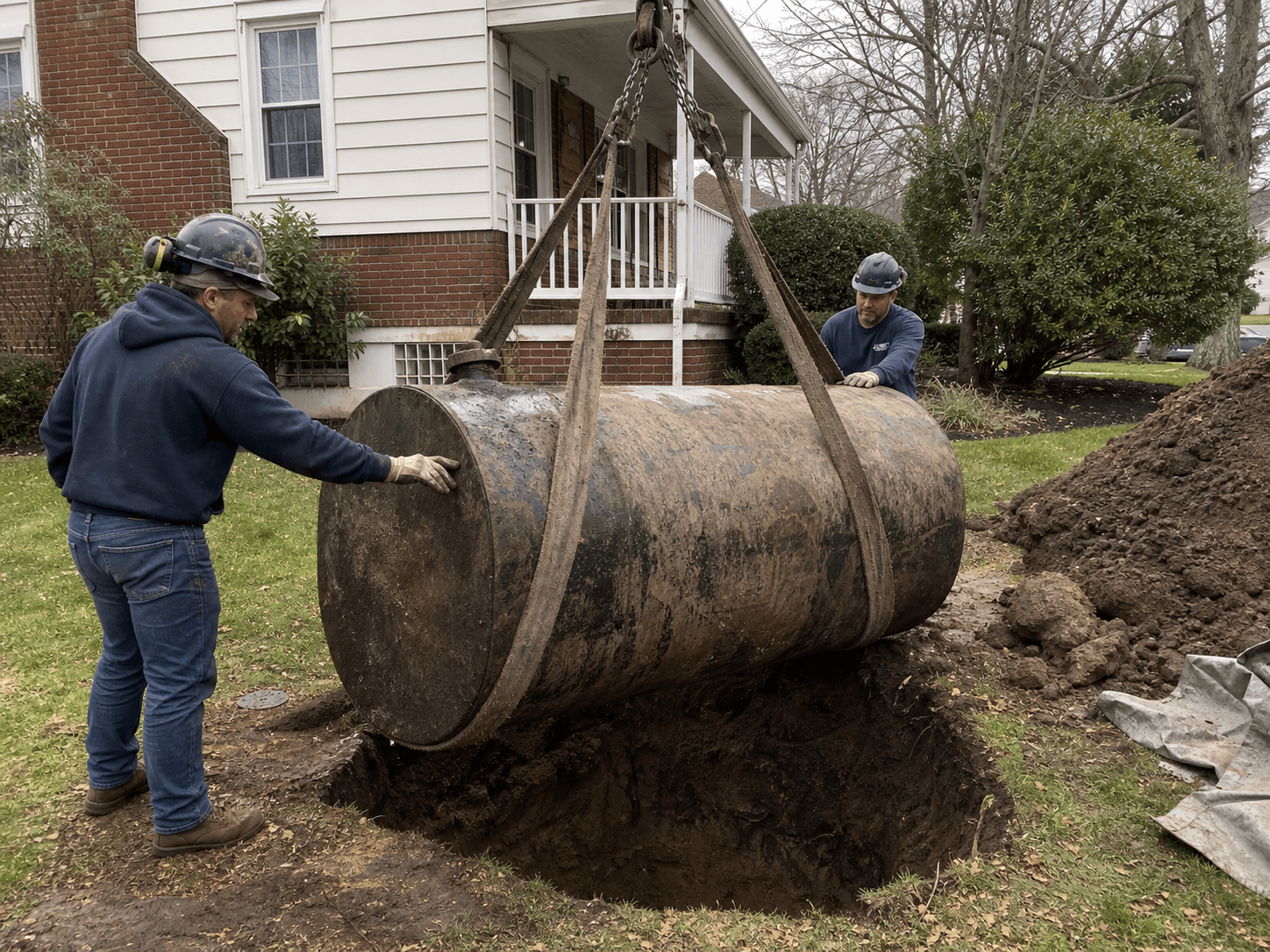
A Written Quote For Your Property
The address, the rough age of the house and where you think the tank sits are enough to start. You do not need paperwork or a tank size to ask.
Oil Tank Removal Grants In New Jersey
People arrive at this subject having been told the work can be done at no cost to them. NJDEP addresses that directly on its own UST Fund page, stating that it is aware contractors advertise that state funding is available and that removal and remediation can be done at no cost to homeowners, and that the UST Fund has never guaranteed funding for applicants to the program.
That is worth reading twice, because it is the state saying it about its own fund. What follows is where each of the three routes actually stands.
Closed since 2011
The State UST Fund, Clean Tanks
New applications for non-leaking tanks have not been accepted or processed since 3 May 2011, for insufficient funds. A tank with nothing wrong with it has no state money behind it.
Accepted, then queued
The State UST Fund, Leaking Tanks
Applications are still accepted and date stamped, but are not reviewed until funding is available. NJDEP states a one year wait on new applications.
Read the end date
Utility Conversion Rebates
The South Jersey Gas conversion incentive ran to 31 December 2025, with receipts due by 31 January 2026, and it rebated appliances rather than tank work.
Sources: NJDEP UST Fund, South Jersey Gas conversion incentive terms. Checked 2026-08-26.
Who Can Remove An Oil Tank In New Jersey
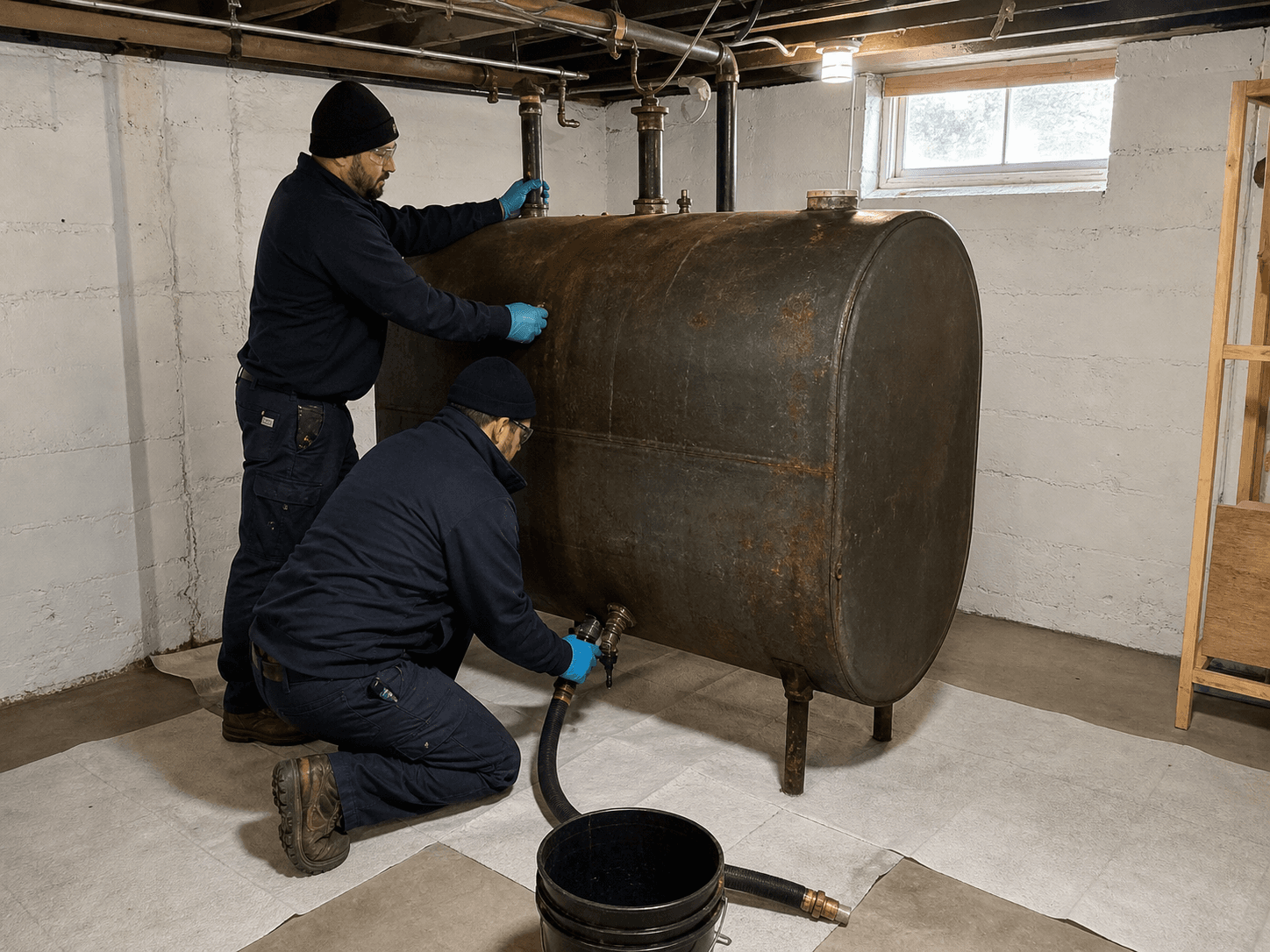
Underground and aboveground tanks are governed by different rules, and the aboveground rule surprises people. For an underground unregulated heating oil tank, NJDEP requires a closure certified individual working for a closure certified UST firm.
For an aboveground tank, NJDEP states that a New Jersey licensed HVACR contractor, a New Jersey licensed plumbing contractor, a homeowner, or a New Jersey licensed DEP contractor can remove it, and that a contractor holding a Home Improvement Contractor registration cannot.
Source: NJDEP UHOT homeowner FAQs. Checked 2026-08-26.
Permit Sign Off With Your Municipality
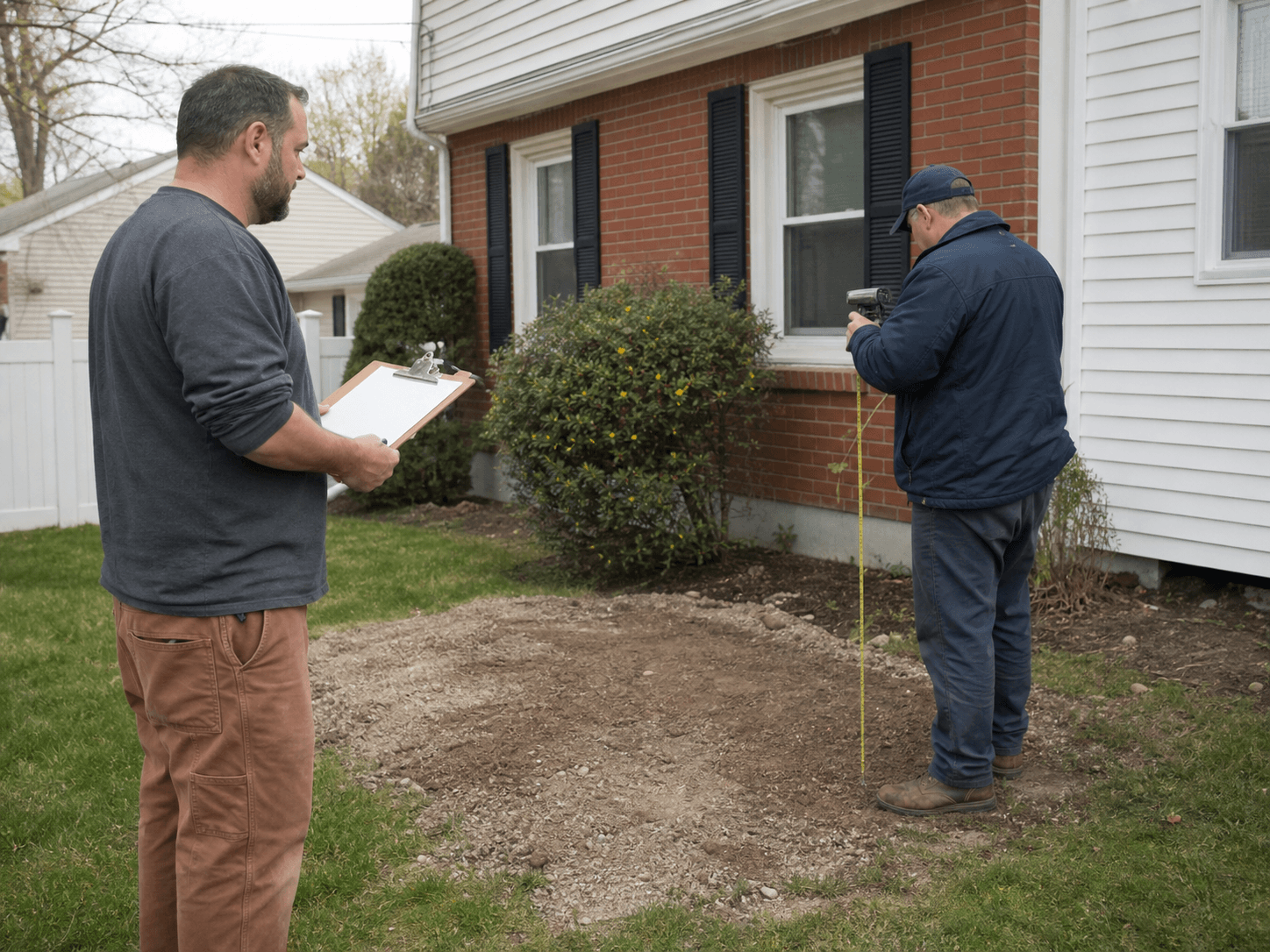
The permit is municipal rather than a state matter, and the controlling document sits with the Department of Community Affairs rather than NJDEP. Removing or abandoning a tank requires an application for and the issuance of a demolition permit, whether or not it is connected to other work.
Plan review and inspection fall to the fire subcode official, not the building subcode official. Before the Certificate of Approval issues, the owner or contractor has to provide a sketch showing the location of the removed or abandoned tank.
Source: DCA Bulletin 95-1B. Checked 2026-08-26.
Where We Work Across The State
This is a statewide service covering properties from the Bergen and Passaic county lines down through the shore counties and across to the Delaware. The counties below are where most enquiries come from rather than a boundary.
- Bergen County
- Essex County
- Hudson County
- Middlesex County
- Monmouth County
- Morris County
- Ocean County
- Passaic County
- Somerset County
- Union County
- Camden County
- Burlington County
Questions New Jersey Homeowners Ask
Does New Jersey require me to remove my oil tank?
Not where there is no sign of a discharge. NJDEP states that if there is no indication of a discharge, there is no state requirement that the tank be removed. NJDEP separately recommends removing out-of-service underground tanks anyway, which is a recommendation rather than a rule.
Is there state funding to remove my tank?
Not for a tank that has not leaked. The UST Fund stopped accepting and processing non-leaking applications on 3 May 2011 due to insufficient funds. Applications for leaking unregulated tanks are still accepted and date stamped, but NJDEP states they are not reviewed until funding becomes available, with a one year wait on new applications.
Who is allowed to remove an underground oil tank in New Jersey?
A closure certified individual working for a closure certified UST firm. The certification requirements sit in the Underground Storage of Hazardous Substances rules at N.J.A.C. 7:14B, and closure, subsurface evaluation and installation are separate certifications.
Do I need a permit to remove a heating oil tank?
Yes. Under DCA Bulletin 95-1B, removing or abandoning a tank requires an application for and the issuance of a demolition permit, regardless of whether it is connected to other work. Plan review and inspection are the responsibility of the fire subcode official.
What happens if the tank has leaked?
On discovery of a discharge, NJDEP must be notified immediately, which it defines as within 15 minutes, by calling 1-877-WARNDEP. Either the homeowner or the contractor can make that call. Remediation then follows the Heating Oil Tank System Remediation Rules at N.J.A.C. 7:26F.
Do I need a No Further Action letter?
Only where a discharge was found and remediated. NJDEP states that if a tank is closed, there was no evidence of a discharge and it passed the municipal inspection, there is no need for an NFA letter.
Start With The Property
Send the address and whatever you already know. If you are not sure whether there is a tank, or where it is, that is a normal starting point rather than a problem.
Ask For A Written Quote
No paperwork needed to make an enquiry.